By the time January rolls around, a lot of Americans already know what’s coming. The house feels colder no matter how high the thermostat goes. The furnace seems to run nonstop. And somewhere in the back of your mind, you’re bracing yourself for that utility bill.
Winter in the U.S. has always been expensive, but the last few years have made people pay closer attention. Energy costs feel less predictable. Homes are fuller during colder months. More people work remotely now, which means lights, heaters, and devices stay on longer than they used to.
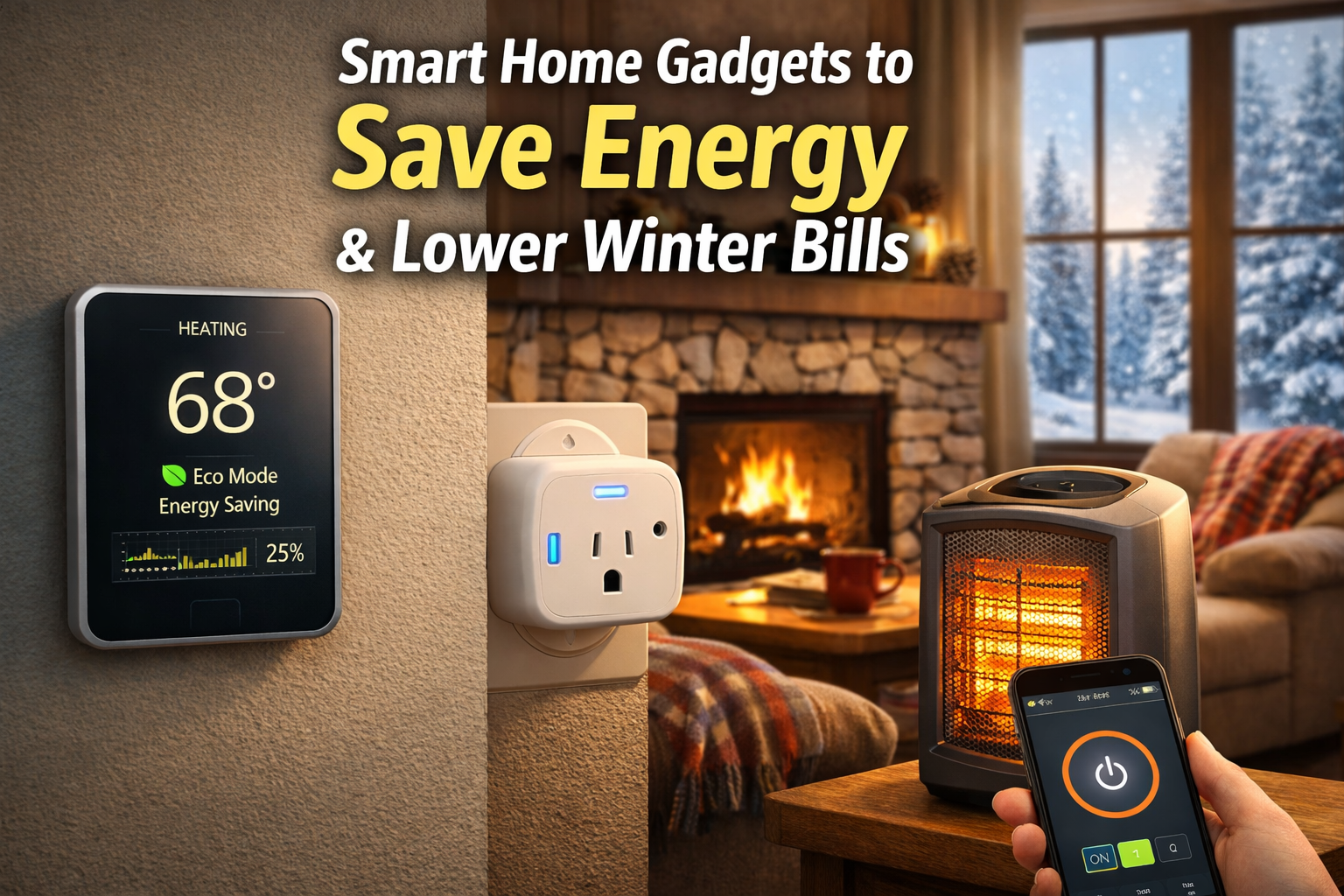
What’s interesting is that many households aren’t trying to “use less” in a dramatic way anymore. They’re just using energy smarter. That’s where smart home gadgets to save energy quietly come into the picture — not as flashy tech toys, but as practical tools that fit into everyday life.
I’ve noticed that the gadgets people stick with aren’t the ones that promise miracles. They’re the ones that make small, sensible adjustments without asking you to think about them all day.
Why winter energy bills hit so hard in American homes
Most U.S. homes weren’t designed with perfect energy efficiency in mind. Older insulation, drafty windows, and uneven heating are common, especially in the Midwest and Northeast. Add space heaters, holiday lights, longer nights, and suddenly your usage spikes.
Another thing people don’t always realize is how much energy gets wasted when no one’s paying attention. A heater running in an empty room. Electronics pulling power all night. Thermostats heating the house as if someone’s home when everyone’s at work.
Energy saving devices in the USA aren’t really about deprivation. They’re about awareness — and automation.
1. Smart thermostats that think ahead (instead of reacting)
If there’s one device that’s become almost normal in American homes, it’s the smart thermostat. And for good reason.
The difference isn’t just being able to adjust the temperature from your phone. It’s the way these thermostats learn. Over time, they notice patterns: when you wake up, when the house empties out, when nights get colder.
Many Americans prefer this because it quietly adapts without constant input. Instead of blasting heat all day, it eases temperatures up and down in a way that feels natural. You’re still warm — just not overheating empty rooms.
Some models even factor in local weather changes. When a sudden cold snap hits, the system responds more intelligently instead of overcorrecting.
What people like:
- Less guesswork about temperature
- Noticeable reduction in unnecessary heating
- Works well for families with routines
What to keep in mind:
- Works best when schedules are fairly consistent
- Installation can feel intimidating for first-timers
This is one of those smart home gadgets to save energy that tends to pay off quietly over time rather than instantly.
Many Americans prefer smart thermostats like the Google Nest because it learns daily routines over time and adjusts heating automatically.
You can check the current price on Amazon if you want to see how it compares with other models.
2. Smart plugs: small devices with surprisingly big impact
Smart plugs don’t get much attention, but they might be one of the most practical upgrades for winter.
Think about all the things plugged in around your home: coffee makers, TVs, gaming consoles, space heaters, holiday decorations. Even when they’re “off,” many still draw power.
Smart plugs electricity saving benefits come from control. You can schedule devices to turn off automatically, cut power completely, or monitor usage in real time.
This is popular in U.S. homes for a reason. People like the feeling of seeing exactly what’s consuming power — and deciding when it doesn’t need to.
Common winter uses:
- Space heaters that shut off automatically
- Lamps that turn on only when it’s dark
- Electronics that stop drawing power overnight
They’re especially useful in older homes where rewiring isn’t realistic.
Smart plugs like the Kasa Smart Plug are popular in U.S. homes because they’re simple, reliable, and work well with heaters and lamps.
You can check the current price on Amazon for reference.
Pros:
- Affordable entry into smart energy control
- No permanent installation
- Easy to move between rooms
Cons:
- Not ideal for hardwired appliances
- Can feel excessive if used everywhere
You can check the current price on Amazon if you’re curious, but many people start with just one or two and expand slowly.
3. Smart lighting that follows your day (and the seasons)
Winter means darker mornings and earlier nights. Lights stay on longer, often without much thought.
Smart lighting systems help reduce that wasted time without forcing you to sit in the dark. Instead of relying on memory, lights follow schedules, motion, or ambient light levels.
In many American households, this shows up as subtle changes:
- Hallway lights that turn off automatically
- Outdoor lights that adjust with sunset
- Dimmers that lower brightness when full light isn’t needed
It doesn’t feel restrictive. It feels intentional.
Many households use systems like Philips Hue because they allow warm lighting at night without keeping unnecessary lights on.
If you’re curious, you can check the current price on Amazon.
People also appreciate the comfort factor. Warm lighting in the evening, brighter light in the morning — it supports natural rhythms during long winters.
Why it works:
- Reduces “always on” lighting
- Helps households stay consistent
- Adds comfort without extra energy use
This is one of those energy saving devices USA homeowners adopt without realizing how much it adds up over a season.
4. Smart power strips for entertainment-heavy homes
Living rooms and home offices tend to be energy hotspots. TVs, sound systems, streaming boxes, monitors, printers — all quietly pulling power.
Smart power strips go beyond regular surge protectors. They can detect when a primary device turns off and automatically cut power to everything else.
For homes where entertainment and remote work overlap, this can make a noticeable difference during winter months.
Many Americans like this because it doesn’t change habits. You turn off the TV like normal — the rest handles itself.
Best for:
- Home theaters
- Office setups
- Kids’ gaming stations
Potential downside:
- Takes a little setup to configure correctly
It’s not flashy tech, but it’s effective.
Smart power strips like this are commonly used in American living rooms and home offices where multiple devices stay plugged in.
You can check the current price on Amazon to see current options.
5. Smart radiator valves and zone heating solutions
Not every American home uses central HVAC. In older buildings, especially in cities, radiators are still common.
Smart radiator valves let you control heat room by room instead of treating the whole house the same. That means guest rooms don’t get heated like living spaces, and bedrooms stay comfortable without overheating.
This appeals to households trying to strike a balance between comfort and cost. You’re not turning heat off — just using it where it actually matters.
What people notice:
- More even comfort
- Less wasted heat
- Better sleep environments
These devices are gaining attention in colder regions where heating bills tend to spike hardest.
Products like tado° are used in older homes where room-by-room control makes more sense than whole-house heating.
You can check the current price on Amazon if you want to compare models.
6. Energy monitoring devices that change behavior
Sometimes the biggest savings come from awareness.
Whole-home energy monitors show exactly how much power your house is using in real time. Seeing those numbers rise when a heater kicks on or a dryer runs can be eye-opening.
This isn’t about guilt. It’s about understanding.
Many households find that once they see patterns, they naturally adjust. Maybe the space heater doesn’t need to run all day. Maybe laundry can wait until off-peak hours.
It’s a mindset shift more than a tech upgrade.
Energy monitors like Sense are used by homeowners who want to understand where electricity is actually going during winter.
You can check the current price on Amazon if you’re exploring options.
Do these gadgets really make a difference?
No single gadget is going to cut your winter bill in half. That’s not realistic — and anyone promising that probably isn’t being honest.
What does happen is gradual improvement. A little less waste here. A smarter schedule there. Over a full winter, those changes compound.
Most Americans who stick with smart home gadgets to save energy say the biggest benefit isn’t just the bill. It’s the feeling of control. You’re not guessing anymore. You’re making informed choices.
Choosing what actually fits your home
Not every smart device makes sense for every household. A small apartment doesn’t need a full energy monitoring system. A large family home might.
A good approach is to start where waste is obvious:
- Rooms that are rarely used
- Devices that stay plugged in constantly
- Heating systems that feel inefficient
From there, build slowly. Technology should support your lifestyle, not complicate it.
A quieter way to get through winter
Winter will always cost more than summer. That’s just reality in much of the U.S.
But the way Americans are handling it in 2026 feels different. Less stress. Less guessing. More quiet efficiency.
Smart home gadgets aren’t about turning your house into a science project. They’re about making everyday living a little smoother — and a little more affordable — during the coldest months of the year.
And sometimes, that’s more than enough.