
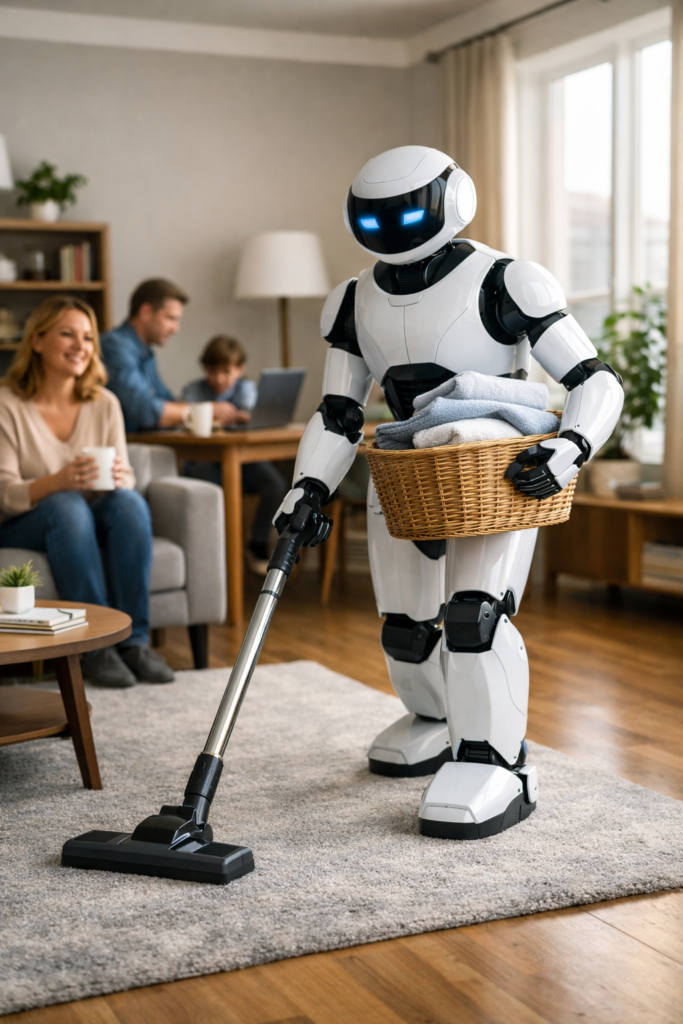
At CES 2026 in Las Vegas, one category quietly stood out amid the noise of screens, chips, and cars: home robots. While past editions of the Consumer Electronics Show focused on concepts and prototypes, this year highlighted practical machines designed for real households. Among them was a robot built to handle routine domestic chores that many US families say they dislike the most.
The robot was unveiled during the opening days of CES 2026 and demonstrated in live home-style setups. It is not designed for entertainment or novelty. Instead, it focuses on basic, repetitive tasks that consume time and energy in everyday American homes. Its appearance reflects a broader shift in consumer technology toward utility rather than spectacle.
CES 2026 and the Shift Toward Practical Home Robotics
CES 2026 marked a noticeable change in how robotics companies present their products. Instead of showcasing distant future ideas, several brands focused on near-term solutions. Home robotics, in particular, moved from experimental displays to functional demonstrations.
This shift is driven by changing household dynamics in the United States. Dual-income families, aging populations, and rising expectations around convenience have increased interest in automated assistance. CES 2026 became a platform where companies addressed these realities directly.
The robot highlighted here fits squarely within this trend. It is positioned not as a replacement for human labor, but as a support tool for routine home maintenance.
What the CES 2026 Robot Does
The CES 2026 robot is designed to handle a range of everyday household chores. These tasks are not complex, but they are often time-consuming and repetitive.
Core Functions Demonstrated at CES 2026
During live demonstrations, the robot was shown performing tasks such as:
- Floor cleaning across different surfaces
- Sorting light household items
- Carrying objects between rooms
- Monitoring basic home conditions
- Assisting with scheduled cleaning routines
The focus was not speed or novelty. Instead, the demonstrations emphasized consistency, safety, and adaptability to standard US home layouts.
Why These Chores Matter to US Families
Surveys and consumer studies referenced during CES 2026 indicate that American households often struggle with time management. Routine chores are frequently postponed or divided unevenly among family members.
Commonly disliked chores include:
- Daily floor cleaning
- Organizing clutter
- Repetitive maintenance tasks
- Carrying items between floors
The CES 2026 robot aims to reduce the burden of these tasks. By automating routine activities, it allows households to redirect time toward work, family, or rest.
How the Robot Works Inside a Typical Home
The robot uses a combination of onboard sensors, cameras, and mapping technology to understand its environment. Unlike earlier robotic devices, it does not rely solely on pre-set paths.
Key Technical Elements
- Real-time room mapping
- Obstacle detection and avoidance
- Adaptive movement across surfaces
- Scheduled task programming
Importantly, the robot is designed to operate without constant user input. Once initial setup is complete, it can function independently within defined parameters.
Benefits Highlighted at CES 2026
The CES 2026 robot offers several practical benefits that appealed to attendees and industry observers.
Time Efficiency
By handling repetitive chores, the robot reduces daily workload for families. This benefit was frequently mentioned by CES exhibitors as a primary use case.
Consistency
Unlike manual cleaning, the robot performs tasks on a regular schedule. This ensures that routine maintenance does not fall behind.
Accessibility
For older adults or individuals with limited mobility, the robot provides support without requiring physical strain.
Integration With Smart Homes
The robot can connect with existing smart home systems. This allows users to manage schedules and monitor activity through standard home dashboards.
Drawbacks and Limitations
Despite its promise, the CES 2026 robot is not without constraints.
Limited Task Complexity
The robot is designed for basic chores. It cannot perform detailed cleaning, cooking, or decision-based household tasks.
Space Requirements
Homes with cluttered layouts or narrow spaces may limit the robot’s efficiency.
Initial Cost
While pricing was not finalized at CES 2026, industry analysts expect the robot to be positioned as a premium home appliance rather than an entry-level device.
Learning Curve
Initial setup and customization may require time, especially for users unfamiliar with smart home systems.
Expert Insights From CES 2026
Technology analysts at CES 2026 emphasized that home robotics is entering a transitional phase. Instead of aiming to do everything, newer robots focus on doing a few things reliably.
Experts noted that consumer trust plays a critical role. Robots that perform visible, predictable tasks are more likely to be adopted than complex systems with unclear benefits.
The CES 2026 robot reflects this thinking. Its design prioritizes transparency and reliability over advanced autonomy.
Realistic Use Cases in American Homes
Busy Working Families
Households with limited free time can use the robot for daily maintenance, reducing weekend workload.
Seniors Living Independently
The robot can assist with physical tasks without replacing human care.
Multi-Story Homes
Carrying items between floors is a practical application highlighted during CES demonstrations.
Shared Living Spaces
In homes with multiple occupants, the robot helps maintain shared areas consistently.
What Comes Next After CES 2026
Manufacturers indicated that pilot programs and limited market releases are expected later this year. Feedback from early users will likely shape future updates.
Industry observers expect gradual adoption rather than rapid replacement of traditional cleaning methods. The CES 2026 robot represents an addition to household routines, not a complete transformation.
Conclusion
CES 2026 showcased a clear shift in home technology priorities. Instead of futuristic promises, companies focused on addressing everyday needs. The household robot demonstrated at the event reflects this change.
By targeting chores that many US families dislike, the robot positions itself as a practical assistant rather than a novelty. Its success will depend on reliability, affordability, and real-world performance beyond the CES stage.
As home automation continues to evolve, CES 2026 may be remembered as the point where robots began quietly integrating into daily American life.
Frequently Asked Questions (FAQ)
1. What makes this CES 2026 robot different from earlier home robots?
It focuses on practical household chores rather than experimental features.
2. Is the robot intended to replace human help?
No. It is designed to assist with routine tasks, not replace people.
3. Can it work in older homes?
Yes, but performance depends on layout and available space.
4. Does it require constant supervision?
No. Once configured, it operates independently within set limits.
5. Is it safe for families with children?
Manufacturers emphasized safety features during CES 2026 demonstrations.
6. When will it be available for consumers?
Limited releases are expected after CES 2026, depending on region.
7. Will it integrate with existing smart home systems?
Yes, compatibility with common smart home platforms was highlighted.